About this video
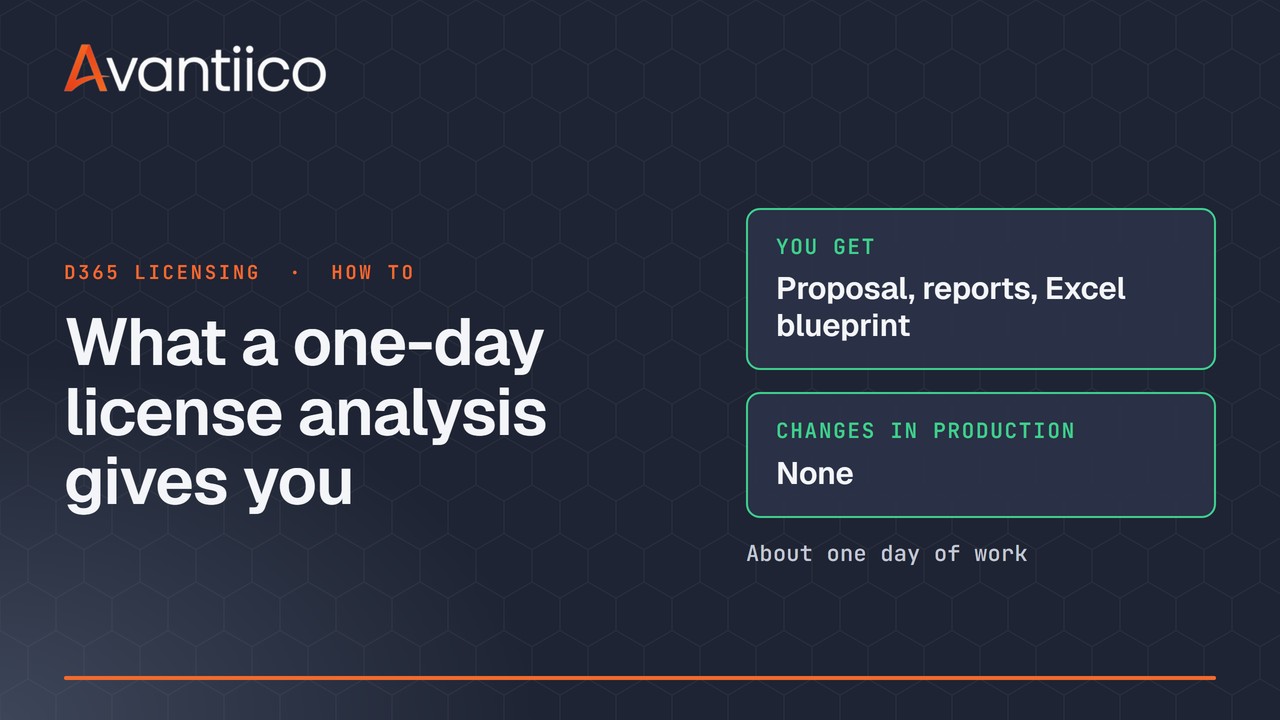
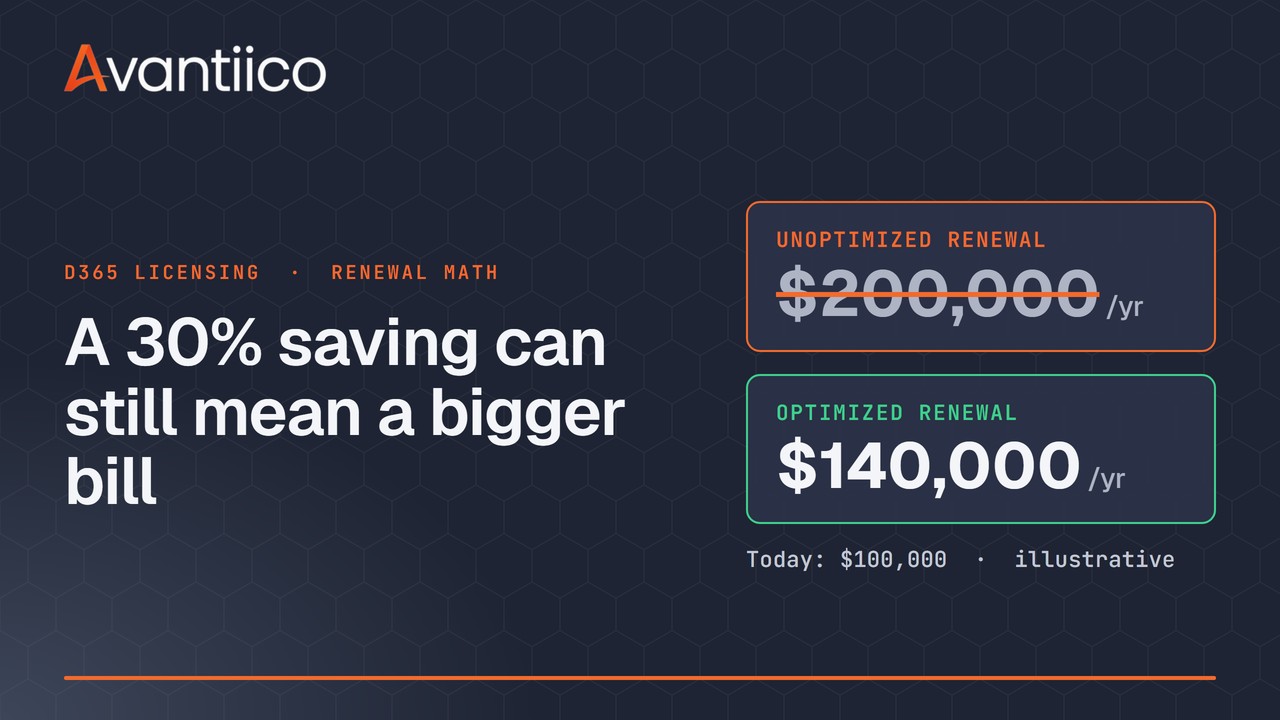
A first-pass Dynamics 365 license model, built in about a day from usage evidence and the license rules, often lands around 30% below the unoptimized renewal. The number that ships is almost never exactly that, and the biggest moves come from decisions managers make once they see the proposal, not from tuning the model.
Usage tells you what people did during the window. It doesn't tell you what they should be doing next year. That's why every change from the first model should be written down: who decided, what changed, why, and what it cost or saved.
Five decisions that move the number
- Keep access nobody was seen using, such as year-end close or audit tasks. The saving goes down.
- Remove access someone uses but doesn't need. The saving goes up.
- Move a task to a different form. Licenses follow the entry point, not the task.
- Give a rare task a temporary role. A temporary role isn't a temporary license.
- Concentrate a task on fewer people. Fewer licenses, but a possible segregation of duties conflict.
Companion article
Your Managers, Not the Telemetry, Decide How Much You Save
Chapters
- 0:00Who decides how much you save?
- 0:17What the model decides
- 0:35Decision 1: keep unused access
- 0:52Decision 2: remove access that isn't needed
- 1:09Decision 3: move a task to another form
- 1:24Decision 4: give a rare task a temporary role
- 1:37Decision 5: concentrate a task on fewer people
- 1:50Not always the biggest saving
- 2:15Make every decision visible
- 2:39Bottom line